
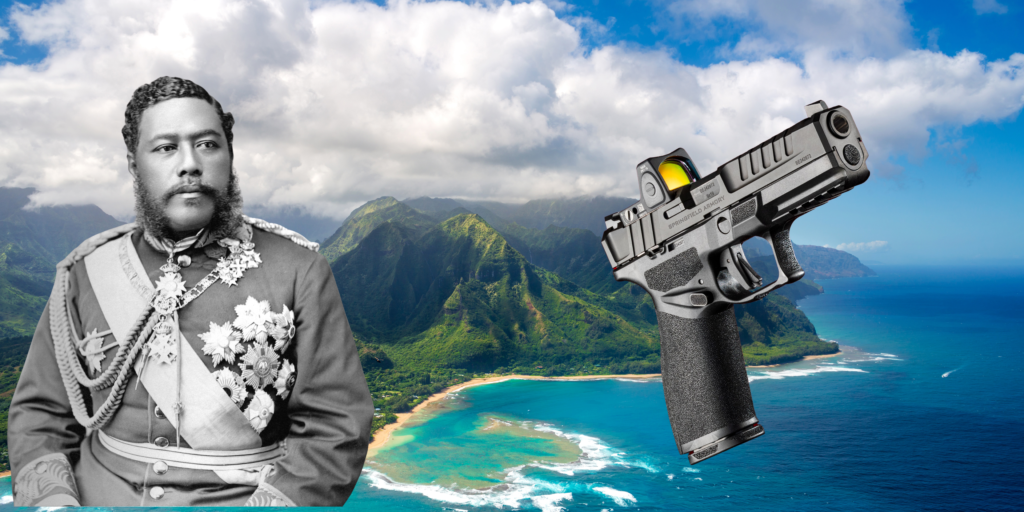

Hawaii is now openly arguing that some of America’s most disgraceful historical gun laws should serve as valid precedent for modern firearm restrictions. In a defense brief filed last Wednesday with the Supreme Court of the United States, the Aloha State attempted to justify its sweeping gun-carry restrictions by citing post-Civil War racist “Black Codes” and weapons regulations from the long-defunct Kingdom of Hawaii.
The filing came in response to Wolford v. Lopez, a Second Amendment challenge to the state’s law requiring licensed gun owners to obtain explicit permission before carrying a firearm onto publicly accessible private property. Hawaii’s argument is twofold. First, the state claims that carrying a firearm onto private property open to the public is not protected by the Second Amendment at all.
Second, it argues that even if the right is protected, its law is constitutional because similar restrictions allegedly existed in American history—no matter how morally bankrupt those laws may have been. At one point in its brief, Hawaii directly acknowledges the racist origins of one of its cited analogues but dismisses the concern outright. “The Black Codes are undoubtedly a relic of a shameful portion of American history,” the state wrote, referring to an 1865 Louisiana law. “But that does not mean that the laws contained within them are irrelevant to the Second Amendment’s historical analysis.”
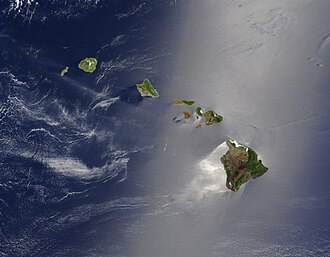
The state also leaned heavily on Hawaii’s pre-statehood past, arguing that because the islands were once an independent monarchy, residents never developed a tradition of carrying firearms into everyday public places. “Hawai‘i’s unique history…means that its residents never developed a practice of bringing guns into shops, convenience stores, and the like,” the brief asserted.
A Test Case With National Consequences
Although the case originates in Hawaii, the outcome could have far-reaching implications. Several heavily populated states—including New York, New Jersey, California, and Illinois—have adopted similar “default prohibition” laws that presume firearms are banned on private property unless the owner affirmatively allows them.
These laws were passed in direct response to the Supreme Court’s Bruen decision and were designed to make lawful carry so impractical that it is effectively meaningless. Plaintiffs in Wolford estimate Hawaii’s rule renders nearly the entire island of Oahu off-limits to licensed carriers.
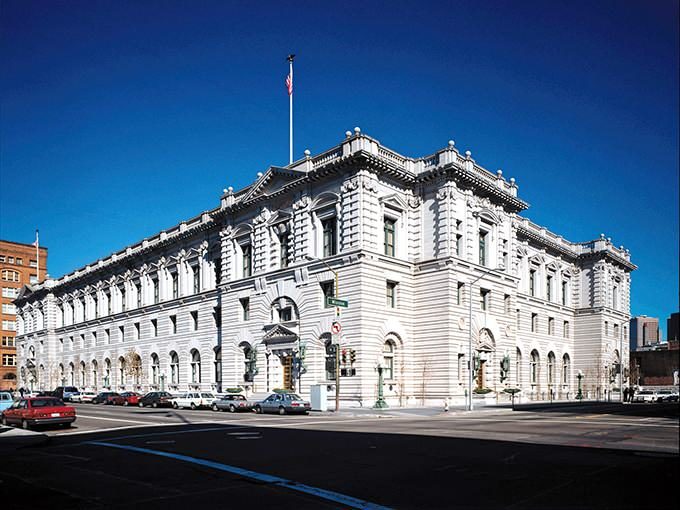
In September 2024, a divided panel of the Ninth Circuit Court of Appeals upheld Hawaii’s law while striking down a similar California statute. The panel concluded California’s requirement that property owners post signage granting permission was too burdensome, but inexplicably ruled Hawaii’s broader restriction acceptable. That decision made the Ninth Circuit the only federal appellate court to uphold such a default prohibition. Both the Second and Third Circuits have ruled similar schemes unconstitutional.
Addressing New York’s version, a Second Circuit panel wrote in Antonyuk v. James that historical analogues do not support “a default presumption against carriage on private property open to the public.”
Hawaii’s Radical Legal Theory
Hawaii’s defense rests on an aggressive reinterpretation of both history and constitutional rights. “A state law that regulates firearms comports with the Second Amendment,” the state argued, “if historical analysis establishes either that the plain text does not protect the conduct, or that the law is consistent with our Nation’s tradition of firearm regulation.”
According to Hawaii, both conditions are satisfied—even if doing so requires relying on racist post-Civil War laws and royal edicts from a pre-constitutional monarchy. The state further contends that even if there was a historical presumption allowing lawful carry on private property elsewhere, Hawaii’s lawmakers are free to revoke that implied permission by statute.
“Because there has been no custom of public carry in Hawai‘i,” the brief states, “there is no basis for finding that every implied license for the public to enter private property includes an invitation to carry a gun.”
What Comes Next
Legal scholars remain divided on how the Supreme Court may rule. Some believe Hawaii’s reliance on historically suspect laws makes its position especially vulnerable under Bruen. Others speculate the Court may weigh private property rights more heavily than carry rights in this specific context. The stakes are undeniable. If Hawaii prevails, states hostile to the Second Amendment will have a roadmap to nullify lawful carry through bureaucratic default bans—without ever openly repealing the right itself.
The Supreme Court has scheduled oral arguments in Wolford v. Lopez for January 20, 2026.
At 2 If By Sea Tactical, we’ll be watching closely. Because if racist laws and royal decrees can be repackaged as “historical tradition,” no constitutional right is truly safe.
Here at 2 If By Sea Tactical we strive to bring you the best experience in the firearms world. As we continue to grow the media arm of 2 If By Sea, make sure you keep tuning in to our Youtube Channel @2ifbyseatactical or on Rumble @2ifbyseatactical and right here at “The Patriot’s Almanac” to stay informed on the latest happenings in the firearm world! But we are not lawyers, so this isn’t legal guidance.
Stay sharp, stay informed, and stay ready.